A backyard pool is a great way to beat the heat, but there are also safety regulations to consider. Pool fencing laws in the Sutherland Shire are strictly enforced, and non-compliant fences can lead to $550 on-the-spot fines. Even temporary or inflatable pools are not exempt. If you’re unsure whether your current fence meets legal standards, this guide will walk you through the key rules, common mistakes, and what to do to stay safe and fine-free.
Understanding Pool Fence Regulations in the Sutherland Shire
Pool fencing laws in NSW are based on the Swimming Pools Act 1992, which is all about keeping kids safe and reducing the risk of accidents. It outlines what’s legally required when it comes to pool barriers from fence height to gate specifications, and applies to all types of pools, whether built-in or temporary.
The Sutherland Shire Council plays a hands-on role in making sure these rules are followed. They carry out inspections, respond to complaints, and can issue fines if your pool doesn’t meet the standard. So even if your pool has been there for years, it still needs to comply with the current safety regulations.
Key Compliance Requirements
Fence Height
Your pool fence must be at least 1.2m high from the ground level. This applies to the entire barrier, including gates. This requirement makes it hard for young children to climb over, so even small changes in ground level can affect compliance.
Gate Specifications
Pool gates must swing outward from the pool area and must be fitted with a self-closing, self-latching mechanism. The gate should automatically shut and latch behind you without needing any help. The latch must be located at least 1.5m above ground level so it’s out of reach of children.

Non-Climbable Zones (NCZ)
The non-climbable zone is a 900mm clear space around the outside of your pool fence, measured in all directions. Within this area, there should be no objects or surfaces that a child could use to climb over the fence. Common offenders are trees, chairs, barbecues, pot plants, retaining walls, and even large toys.
CPR Signage
CPR signages are legally required for residential pools in NSW. The CPR chart should be clearly visible from anywhere in the pool area. It should be weatherproof, easy to read from a distance of at least 3m, and kept in good condition.
Pool Types Covered
It’s not just permanent pools that need fencing. If you’ve got a portable or inflatable pool that can hold 300mm of water or more, it falls under the same rules. This often catches people off guard during summer when temporary pools are set up in backyards. Even if it’s just for the holidays, once the water depth is reached, fencing and signage laws apply; see NSW Fair Trading’s portable pool safety guidelines for more details.
Common Non-Compliance Issues
Even with the best intentions, a lot of pool owners accidentally fall short of the rules. Here are the most common issues that come up during inspections in the Shire:
Obstructions in the Non-Climbable Zone
One of the biggest mistakes is placing items too close to the pool fence. Things like outdoor furniture, garden pots, BBQs, toys, or even overhanging tree branches can all be used as climbing aids by kids. These must be at least 900mm away from the outside of the fence.
Faulty or Non-Compliant Gates
Gates that don’t self-close or self-latch are another frequent issue. Sometimes it’s just wear and tear, like sagging, a misaligned latch, or a spring that’s lost tension. But if your gate doesn’t automatically close and secure itself after every use, it’s considered unsafe and non-compliant.

Fence Heights or Gaps
Over time, landscaping can build up around your fence and reduce the effective height of your barrier. Fences under 1.2m high or with gaps over 100mm between panels or under the base can all trigger a fail during inspection.
Missing or Outdated CPR Signage
Another one that’s often overlooked is the CPR sign. If the sign is missing, faded, damaged, or doesn’t show the current recommended procedures, it won’t be deemed as compliant. CPR signs must be clearly visible from the pool area and kept in good condition.
Consequences of Non-Compliance
Pool safety laws in the Shire are enforced by the Council, and failing them can hit your wallet hard.
Fines
If your pool fence doesn’t meet legal standards, you could be issued with a $550 on-the-spot fine, even if no incident has occurred. Council officers don’t need to give a warning. If they spot a breach during inspection, they’re allowed to issue a penalty already.
Legal Action
If the issue isn’t fixed or is considered high risk, further legal action can follow. This could include formal notices, court appearances, or even orders to drain or restrict access to your pool until it’s compliant. And if ever a safety incident happens because your fence was non-compliant, the consequences could be far more serious.
Steps to Ensure Compliance
Making sure your pool fence is compliant doesn’t have to be stressful, especially if you take a proactive approach. Start by doing self-check using official tools, and don’t hesitate to call in a professional pool fence installer if something doesn’t seem right.
Here are a few simple steps to keep your pool area safe and legally compliant:
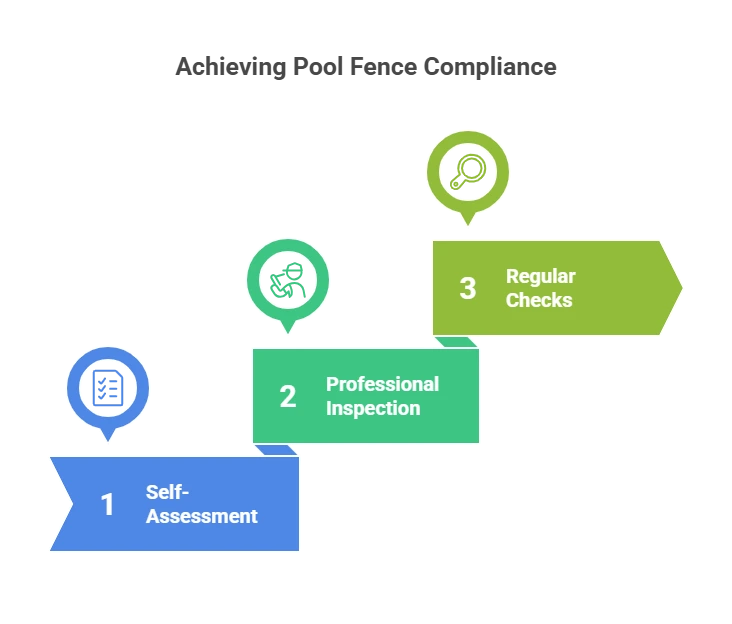
- Use the NSW Swimming Pool Register Self Assessment Checklist to assess your fence, gate, signage, and non-climbable zones.
- Book a certified pool inspector if you’re unsure or preparing to sell your property. They can issue a compliance certificate or flag what needs fixing.
- Check your pool barrier regularly, especially after storms or landscaping changes, to make sure gates still close and that the non-climbable zones remain clear.
If you’re planning a new fence or upgrading an old one, it’s worth checking out our pool fencing guide to get it right the first time.
Pool Registration and Certification
If you have a swimming pool that can hold more than 300mm of water, it must be registered on the NSW Swimming Pool Register. This applies to all types, including above-ground, portable, and inflatable pools. Failing to register will result in fines. To prove that your pool fence meets current safety laws, you’ll need a Certificate of Compliance. This confirms that your barrier is in line with the Swimming Pools Act 1992. It’s especially important if you’re selling or leasing your home, as a certificate is legally required for the contract.
If your pool barrier doesn’t meet the required safety standards, a certifier will issue you a Certificate of Non-Compliance and a written notice outlining what needs to be fixed. This certificate is valid for 12 months, but it does not grant you 12 months to delay repairs. Owners are expected to address safety issues as soon as possible. If your property is being sold, the new owner will have 90 days from settlement to make the pool compliant.
The Sutherland Shire Council conducts regular inspections to ensure pool fences are safe. If your pool is found to be non-compliant, you may be subject to enforcement action or fines until the barrier is brought up to standard.
However, if you’re building a new pool, you’ll need planning approval or a Complying Development Certificate (CDC) before construction.
Conclusion
Pool safety is a legal and moral responsibility, especially when young children are around. In the Sutherland Shire, having a non-compliant pool fence can lead to $550 on-the-spot fines, but more importantly, it puts lives at risk. By understanding the rules, checking your fence regularly, and staying on top of registration and certification, you’re doing your part to keep your household safe.
Need help making your pool fence compliant? If your fence is outdated, damaged, or you’re not just sure if it meets current requirements, it’s best to speak with a qualified pool fencing professional in the Shire. Reach out today and our team can walk you through what needs fixing and help you avoid fines and future stress.